It’s tempting to believe that something undesirable is inevitable or isn’t real because those beliefs forgive inaction. Not happening? No problem! Inevitable? Nothing I do will make a difference.

Whether companies are AI washing their layoffs is irrelevant, the direction of travel is clear and it’s that fewer people will be needed to do the same amount of work. Microsoft CEO Satya Nadella echoed my Rust Belt Redux, warning about AI that “hollows out entire industries” as in last wave of outsourced manufacturing. The steamroller is coming but we have a chance to get out of the way.
Pausing is not action
Calling for a pause in datacenter development limits US competitiveness and a pause in model development is a collective action problem that’s not enforceable. While Anthropic has proposed that we should create an “option” for a pause, they acknowledge the significant challenges.
Even if we did pause, we need to know what we’re giving ourselves time to implement. At best a pause buys time to do something and we need to be clear about what that something is.
Instead of hoping for a pause, we need a positive agenda that will maintain US competitiveness while addressing the downsides for workers and wider risks for society. This post is focused on impact for workers and I’ve organized policy proposals into three buckets: No Regret, Worth Exploring, and Not Now.
Starting this conversation is urgent because it takes time to mobilize government and lawmakers are not tracking this risk. Having spoken to multiple multiple lobbyists and policy advisors - it’s simply not a priority. We need to get ahead of it before we start seeing 2-10x higher unemployment in tech hubs.
No Regret
These are proposals that have been around for a long time and that we can pursue with more urgency in this moment.
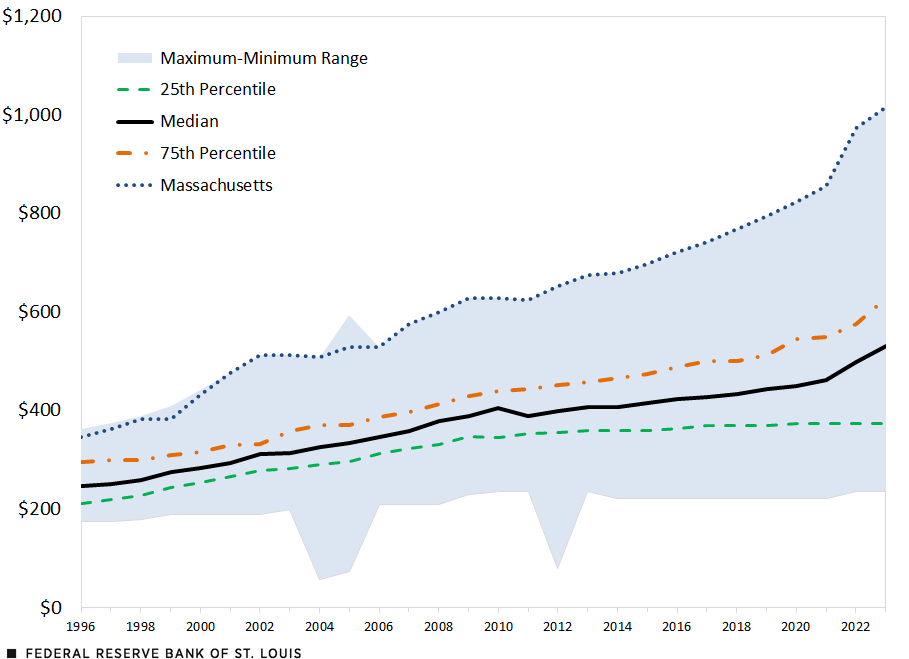
Stronger, More Uniform Unemployment Insurance. This is supported by economists because programs exist across all 50 states and support would go directly to those affected by any displacement, direct or indirect (i.e. it doesn’t matter if someone works in tech or downstream services they’re still eligible). While the federal government provides funding for administration, the programs are designed and run by the states which results in wide variation of benefits. For example, the maximum Weekly Benefit Amount (WBA) ranges from above $1,000 in Washington State to $275 in Florida (link). States in partnership with the federal government have an opportunity to strengthen these programs proactively.
Portable Benefits. It’s a quirk of history that our health benefits are tied to our employer. During WWII, the government instituted wage controls so companies had to find something other than wages to attract employees. They started offering health benefits which employees valued and - because they weren’t taxed as income - were a cheap way to provide more compensation (link).
Today, the US is the only high income country with this setup which has all sorts of unintended consequences including compounding a person’s financial risk by taking away their health insurance at the same time they lose their job.
Making benefits portable would reduce disruption of workers’ coverage, reduce administrative overhead, and enable companies to contribute to the benefits of full-time/part-time employees as well as contractors (link).
Worth Exploring
Movable Mortgages. During economic dislocations jobs and the people that need them may not be in the same region. The biggest barrier to relocation is often housing related: workers can’t afford to move because it would require getting a new mortgage at a higher rate. It’s possible to solve this by making mortgages portable and assumable (link). Portable means you bring your mortgage with you and apply it to the purchase of the new home, requiring only a smaller supplemental mortgage if needed. Assumable means you can assume the mortgage of the seller who may have a better rate, adjusting as needed for any differences in credit that would impact the rate (diagram).
Skills Development. Singapore has been running the SkillsFuture program for 10 years which provides every Singaporean with a credit they can use toward approved courses. There is a larger mid-career refresh to the credit to ensure life-long investment in workers in the right areas. ~70% of participants said it helped them advance and do better work. Google and Meta have launched $50M and $115M programs, respectively, to train people in trades necessary to build data centers like electrical, plumbing, welding. Programs less reliant on the largesse of large tech companies would be welcome.

US Government AI Fund. The first oil field in Norway was discovered in 1969. Today, Norway exports ~$150B/yr in oil and gas - quite a lot when you consider there are less than 6M people living there. Initially, Norway spent its oil revenue but this led to inflation, credit bubbles, and currency depreciation (IMF). In 1990 it established the Norwegian Government Petroleum Fund that turned a volatile income stream into a perpetual source of national wealth by only spending the real returns of the fund. This allowed the principal to grow and today the fund is worth $2 trillion or $360k per person.
The argument against a similar program funded by taxing chips, data centers, or tokens is that AI and associated revenues are the product of private companies rather than a found national resource. However, as AI displacement takes place the AI industry will create a significant negative externality - a negative outcome that doesn’t affect their business. And because it doesn’t affect their business, the only forcing function to address jobs displacement will be the gobernment.
This is the hardest proposal to get right. Taxes create distortions and hamper a rapidly growing and strategic industry. Investments require picking the right firms and risk tipping the market. But an industry that is growing rapidly and displacing more jobs than it creates will need to contribute to minimizing the downside.
Not Now
Variable taxation as a function of labor intensity. There are some proposals that would lead to higher taxes on companies that lean on AI more than humans. Aside from the obvious measurement and reporting problems, this creates perverse incentives. There’s an apocryphal story about economist Milton Friedman traveling to China in the 70’s when he saw a large construction crew using shovels to dig a canal. He asked “Why aren’t you using excavators which would be much more efficient?” He was told, “You don’t understand. This is a jobs program.” To which Milton responded, “Oh, I thought you were trying to build a canal. If it’s jobs you want, you should give these workers spoons, not shovels!”
Universal Basic Income (UBI). There is strong support for UBI across conservatives and liberals: Vice President JD Vance, New York City Mayor Zohran Mamdani, and Trillionaire Elon Musk all support it. The challenge here is funding and politics. Funding a universal program is expensive giving each adult $1k per month would cost $3.2T which is about 2x the existing national deficient. Reducing the number of people who qualify helps lower the cost but then it looks like public assistance and becomes less politically popular. Try to fund it by simplifying other social safety net programs will trigger other political fights. Either way, the first step is to figure out the right mechanism to address the negative externality as discussed above.
Act!
It’s great that Google and Meta are funding programs to train workers. But these programs are small, privately funded, and could disappear tomorrow. Instead of hoping for a pause, let’s push government for simple, actionable policies that will help workers.
Call your representatives! Their staff listen patiently and record constituent feedback. They are looking for stories and soundbites. Find the contact info for your senators and reps.
Speak up! The next time you hear someone say “we just need to stop everything” ask them “what are we stopping for?” Let’s strengthen the programs we’ve got and take advantage of the crisis to make changes we should have made decades ago.